The project itself :
Project Overview
Smart dashboard platform designed to streamline the management of short-term rental properties across multiple channels
Problem:
Property hosts who manage listings across multiple booking platforms (e.g., Airbnb, Booking.com, Vrbo) face a significant challenge in keeping their information synchronized. These platforms require frequent updates to availability, pricing, and listing details. This constant need for manual updates can quickly become overwhelming, leading to errors, inconsistencies, and a poor user experience.
Key challenges:
Hosts had to manually update each platform whenever availability or pricing changed, making the process time-consuming and inefficient. These delays often created inconsistencies across platforms, such as double bookings, pricing discrepancies, or outdated property details, which led to guest frustration. Over time, this operational friction negatively affected bookings, damaged reviews, and ultimately impacted hosts’ revenue.
all about the user
User Research
This part of the project focuses on the research process, highlighting user roles, goals, behaviors, and the key metrics that shaped the solution.
Survey Summary
The questionnaire was completed by 8 property hosts, each managing between 3 and 8 listings across multiple booking platforms. 75% of participants manage all listings manually, updating availability and prices on each platform separately. On average, hosts spend around 6–10 hours per week managing their properties, mostly handling updates and guest communication. 60% reported occasional synchronization issues such as double bookings or outdated pricing. Most participants rely on basic market research, checking competitor prices, local occupancy, and average nightly rates to set their own pricing. None of the hosts currently use a centralized tool, and all described the process as time-consuming and repetitive
Key Performance Indicators
To measure the effectiveness of the Superhost tool:
Synchronization Accuracy:
Achieve 99%+ error-free updates across platforms to prevent inconsistencies
Time Savings:
Reduce hosts’ time spent on manual updates by 50%
Booking Growth:
Increase bookings by 15% within three months
Guest Satisfaction:
Improve average guest review scores by 0.5 stars
Host Retention:
Maintain 90%+ active usage of the tool over six months
Role Analysis
To understand the ecosystem around short-term rental management, I mapped all user roles involved:
Primary User:
Independent host managing 3–10 properties across multiple platforms (Airbnb, Booking, Vrbo)
Secondary Users:
Co-hosts / assistants: help with guest communication and calendar updates
Cleaners & maintenance staff: rely on accurate booking data
Guests: indirectly affected by synchronization errors
This helped define who the system truly serves and whose needs must align for smooth operation.
User Role Goals
Business Goals
Maximize property profitability through dynamic pricing, optimized occupancy, and cost control
Leverage performance data and analytics to make informed business and growth decisions
Scale operations sustainably while maintaining control and quality
Build long-term business resilience through automation and transparency
Operational Goals
Ensure smooth day-to-day operations across bookings, check-ins, cleaning, and maintenance.
Centralize management processes to minimize manual work and platform switching
Optimize resource allocation between team members, tools, and time
Experience Goals
Deliver consistent, high-quality guest experiences that drive satisfaction and repeat bookings
Maintain brand consistency and reputation across multiple booking channels
Increase host autonomy by reducing reliance on external support or third-party tools
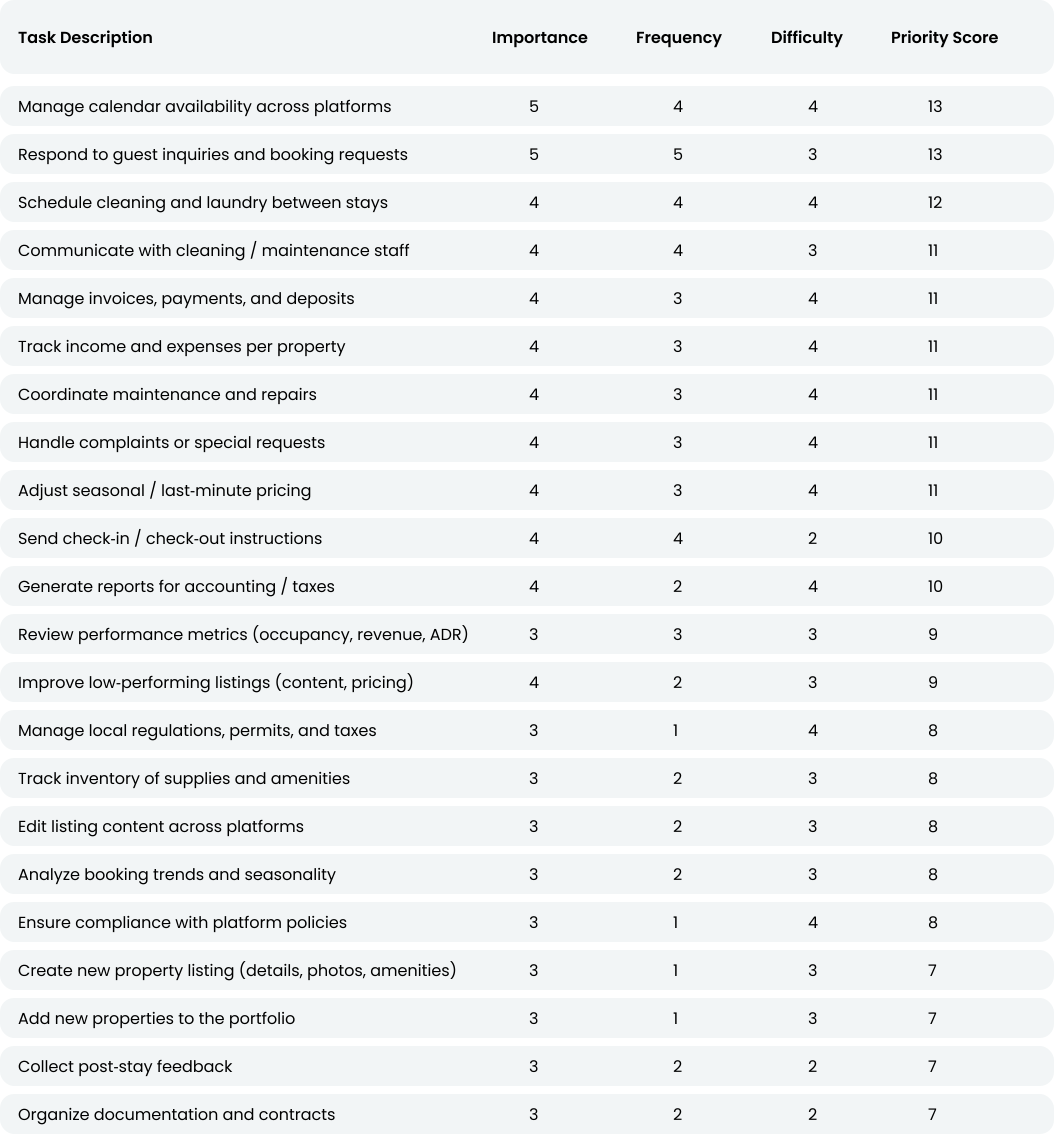
Tasks Analysis
To identify which tasks matter most to property managers, I rated each activity by how important, frequent, and difficult it is in their daily workflow.
The priority score helps reveal where the main usability challenges and design opportunities lie.
The project schematically :
Starting the Design
This section focuses on the design process, from shaping the solution to creating the wireframes that brought the experience to life.
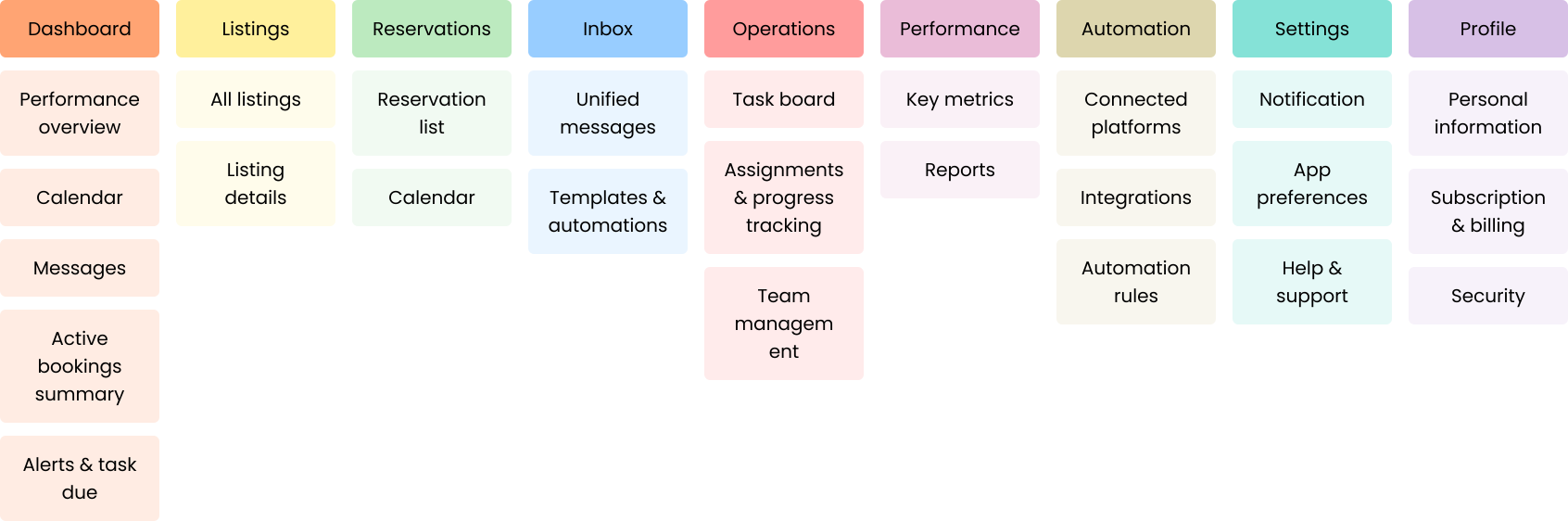
Information Architecture
After mapping user goals and tasks, I translated them into a clear Information Architecture. The structure focuses on efficiency and clarity, grouping related features together and ensuring the most used actions are always easy to reach
The Solution
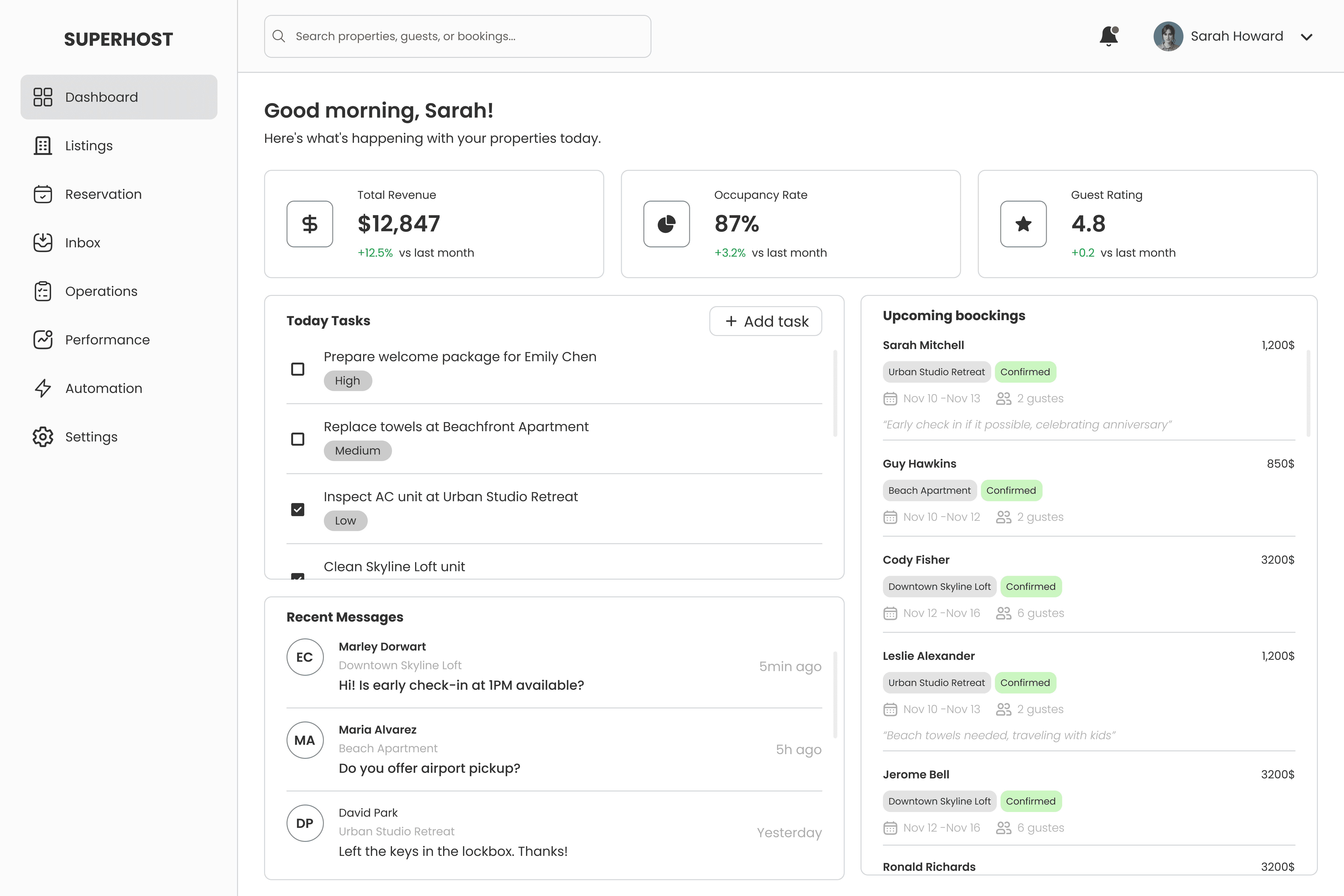
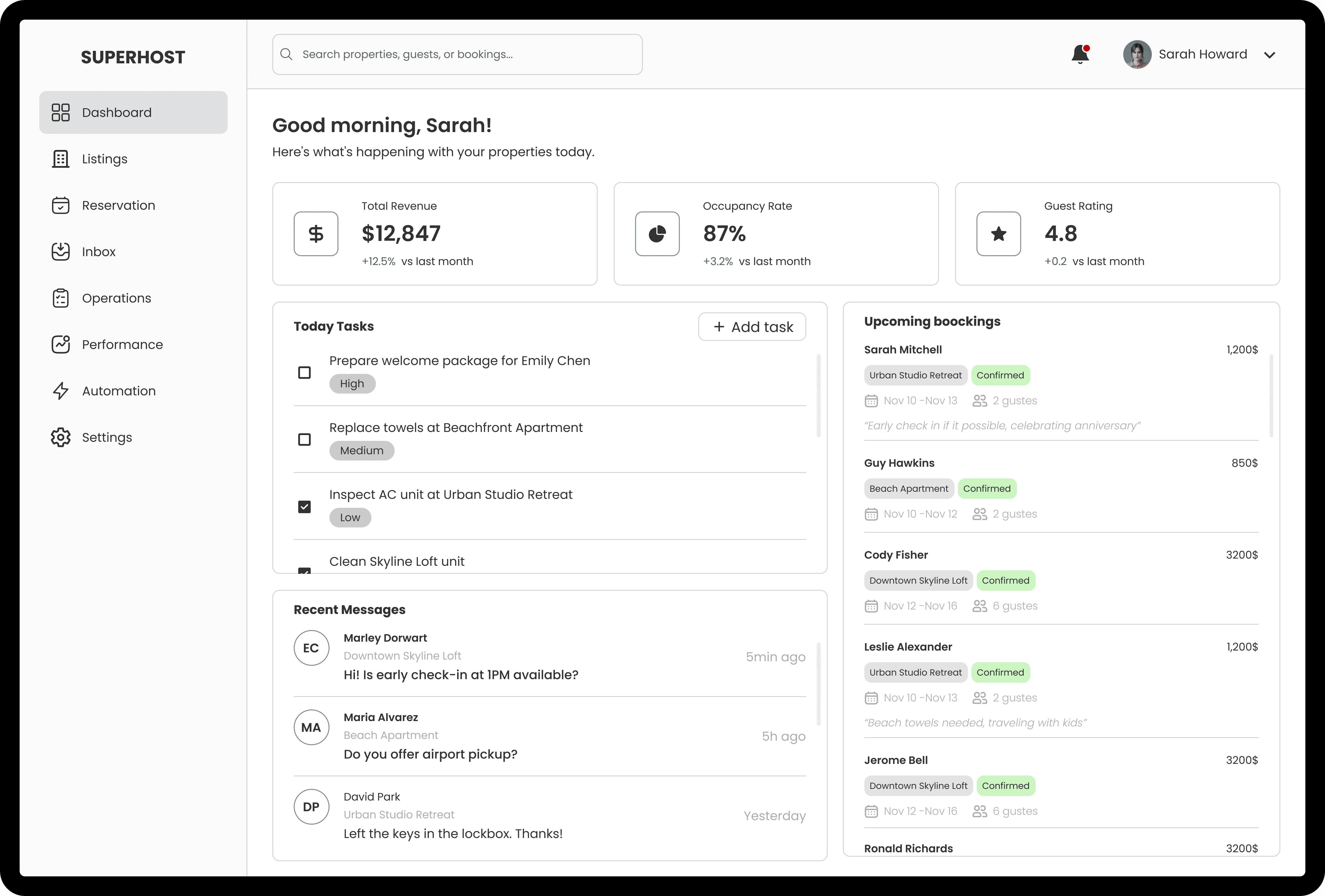
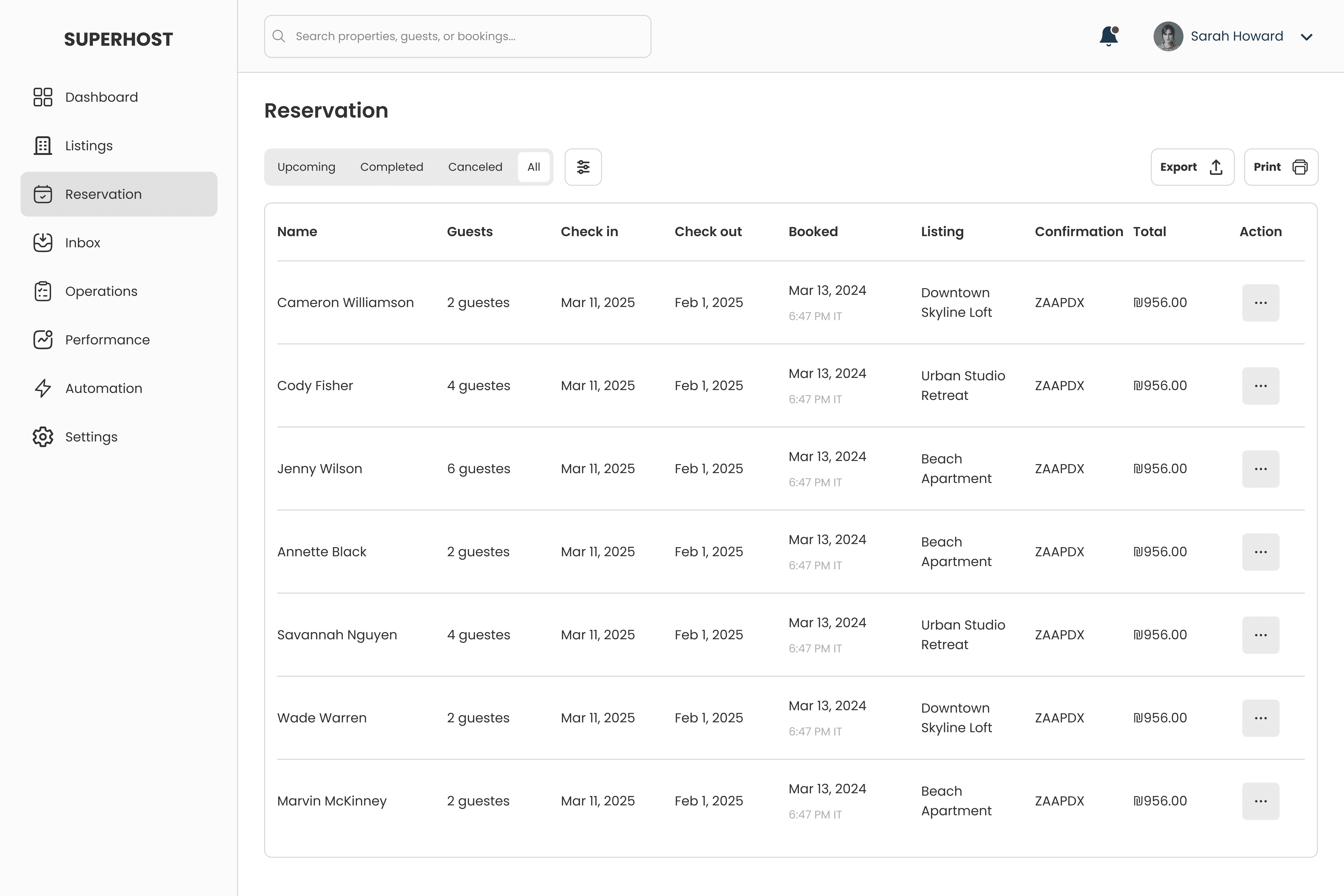
The solution is a unified platform that simplifies and centralizes short-term rental management.
It was designed to help hosts save time, reduce errors, and gain full visibility across all their properties and channels.
Key capabilities include:
Real-time synchronization
to prevent double bookings and data inconsistencies
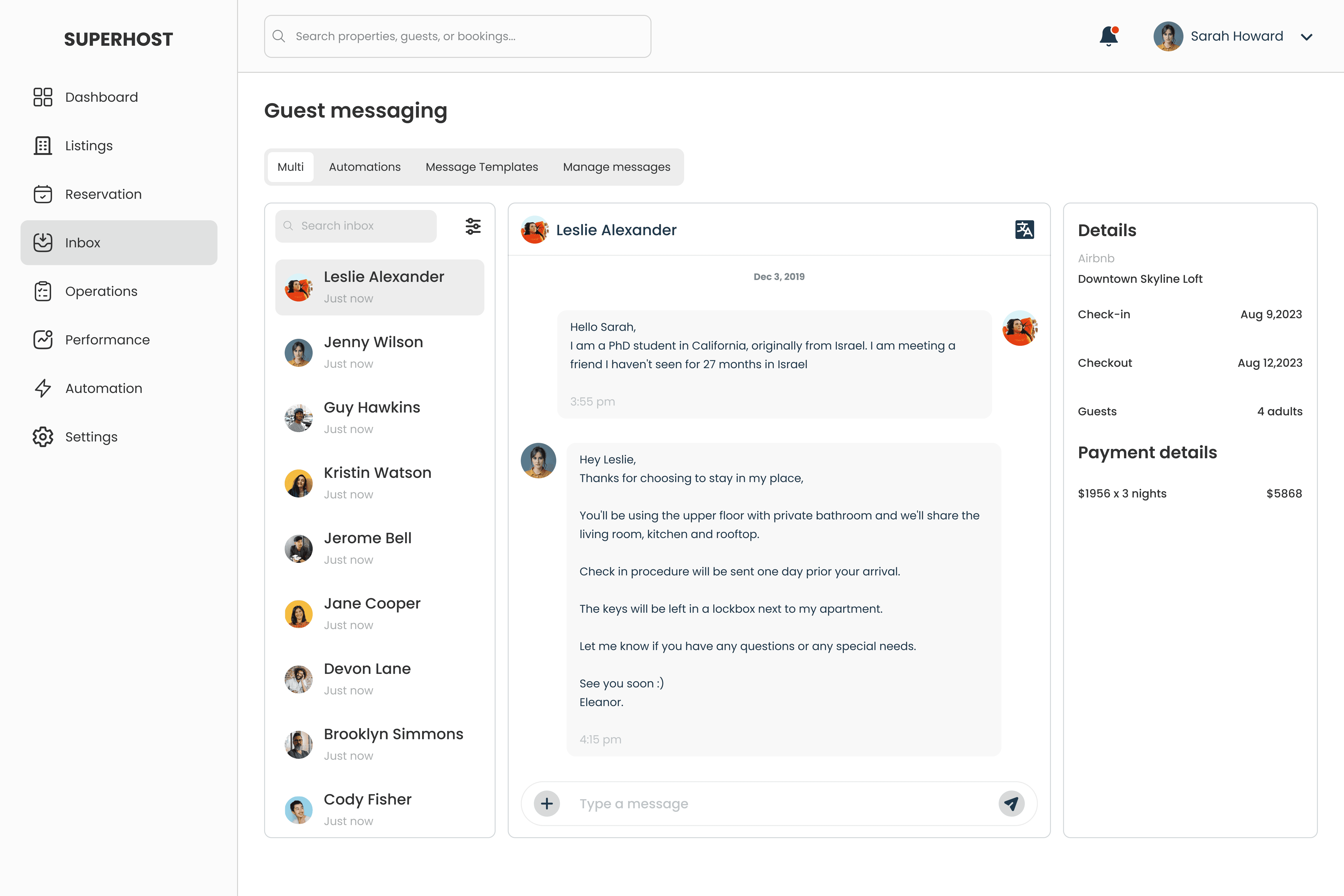
Unified communication hub
to manage all guest messages in one place
Performance insights and reports
for data-driven decisions
Task and team coordination tools
to streamline daily operations
Simple, intuitive interface
focused on efficiency and clarity